Austin Day Tours
I’m Serious Day Tour Man AI, your day trip expert. Ask me anything — where to go, how to get there, and what’s actually worth your day.
Austin’s day trips run on two Texas institutions — barbecue and swimming holes — plus a Hill Country wine region that grew up while nobody east of it was paying attention. The best brisket in America is thirty-five minutes away in a town that made barbecue its legal identity. The famous swimming holes now run on reservation systems, and one has stopped swimming entirely — current status below. The Alamo is smaller than you expect, and its four sibling missions are better. And a million bats fly out from under a downtown bridge every summer evening, free, which is still the city’s best trick.
Distances are honest here: Fredericksburg, San Antonio, and Waco are each about ninety minutes, Lockhart barely counts as a drive. Summer runs hot enough that the spring-fed pools stop being scenery and start being survival.
Here’s what’s worth a day, with real times and honest trade-offs.

Popular Day Trips
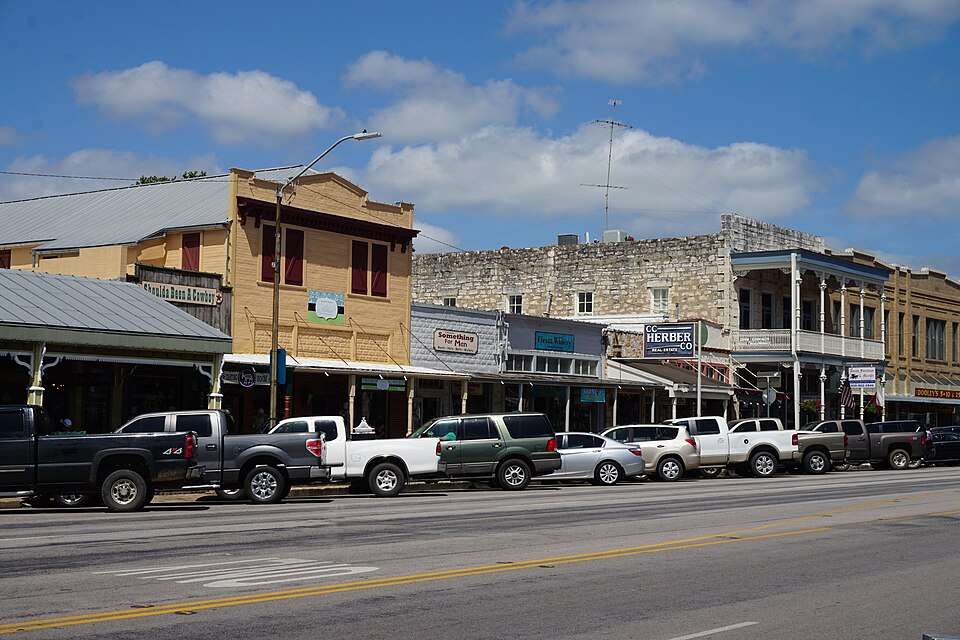
Fredericksburg
The Hill Country Drive, the Pacific War Museum Surprise
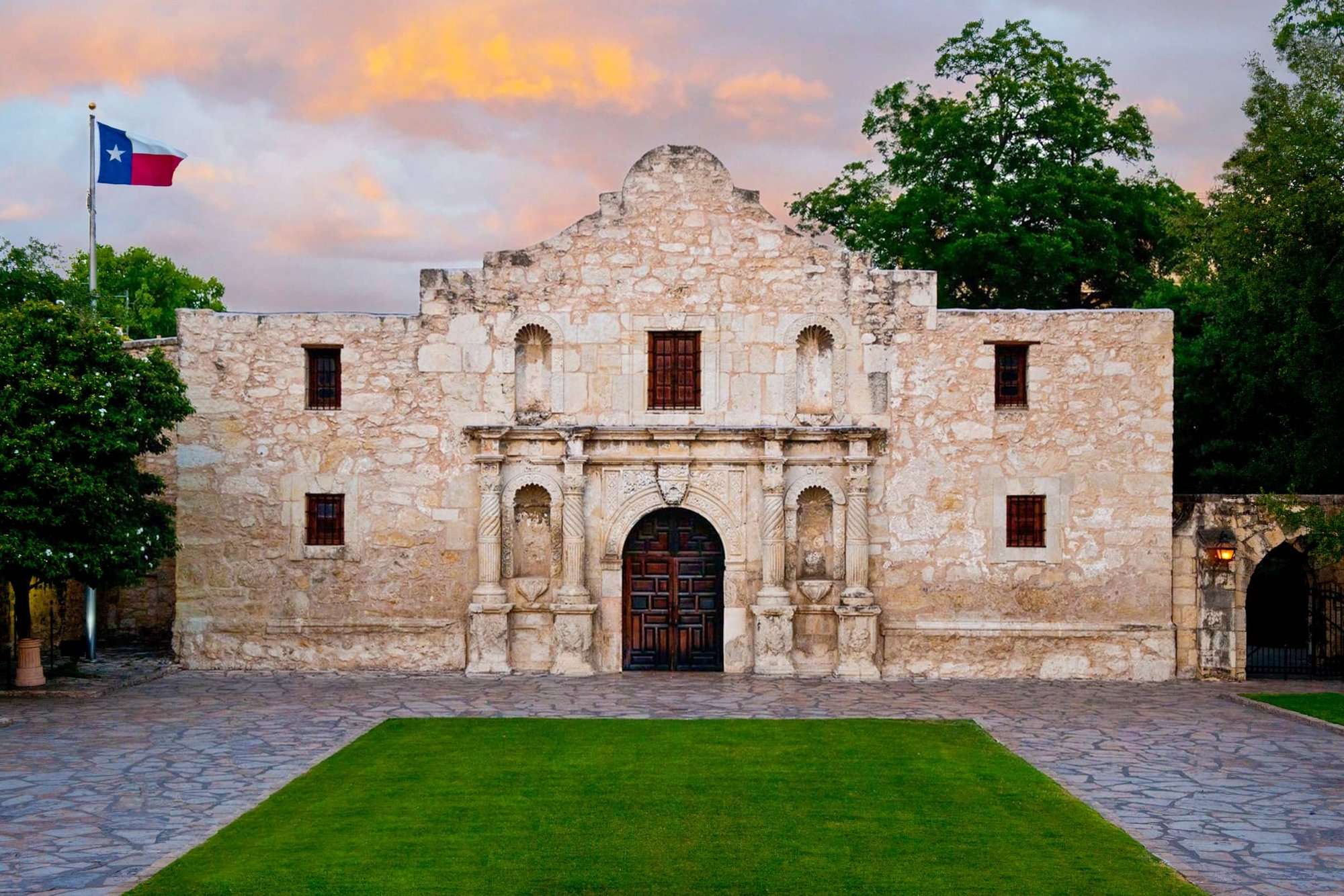
San Antonio
The Alamo Reservation, the Missions Past the Postcard
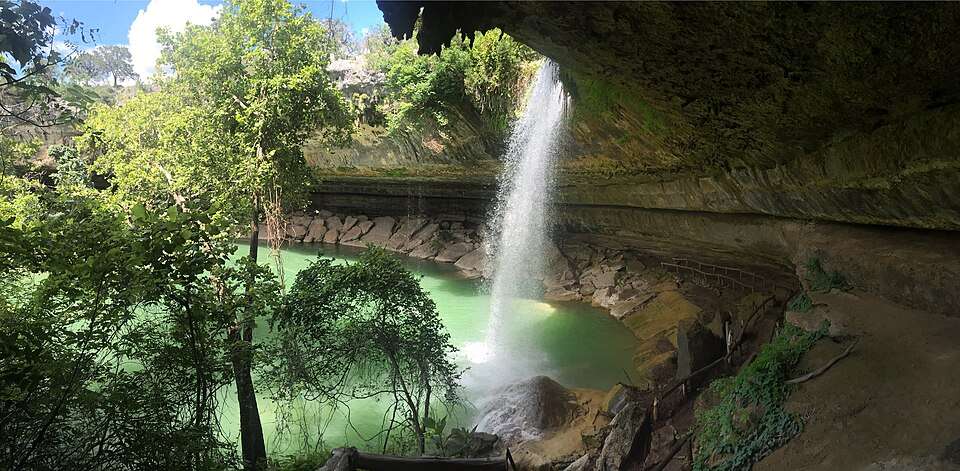
Hamilton Pool
The Reservation Is the Ticket, the Morning Status Call
Fredericksburg & the Hill Country Wine Road
The classic, ninety minutes west. Fredericksburg is the German-settled Hill Country capital — the main street still runs biergartens and schnitzel next to the tasting rooms, and the Wine Road 290 corridor into town has become one of the most-visited wine regions in the country. That popularity cuts both ways. The tasting rooms range from serious estates to party-bus pours, and the weekend limo crowds make it obvious which is which by noon. Texas found its grapes in Spain and the Rhône — Tempranillo and Mourvèdre, not Cabernet — and the good producers lean into that. Go midweek if you can, book the appointment-only wineries, and settle the designated-driver question before you leave, because Hill Country distances double it.
Two non-wine anchors are worth the time. The National Museum of the Pacific War is, improbably, one of the great military museums in the country — it’s here because Admiral Nimitz grew up in Fredericksburg — and needs two hours. Enchanted Rock, the pink granite dome twenty minutes north, is the Hill Country’s essential hike, and its timed-entry reservations sell out weekends. Book it or lose the morning. Peach stands run May through August, bluebonnets peak in spring, and the roadside flower photos come with a rule Texas enforces: stay off private land.
Read the full Fredericksburg day-trip page.
Lockhart & the BBQ Trail
Thirty-five minutes southeast. Lockhart is the legislature-designated Barbecue Capital of Texas, a courthouse-square town where three institutions sit within blocks of each other: Kreuz Market with its no-sauce, no-forks orthodoxy on butcher paper; Black’s with its dynastic sausage rings and brisket; and Smitty’s, operating in Kreuz’s original pit room, where the fire has run for generations and the walls wear the smoke.
The right way to do it is the crawl. Order modestly at each — a quarter-pound of brisket, one ring — then compare. Locals judge the bark and the smoke ring and argue about the ranking; the argument has no winner, and that’s the point. Luling’s City Market, ten minutes further, completes the old-guard circuit.
Two scheduling facts matter. The pits sell out — barbecue is a lunch culture, and arriving by 11 protects the full menu. And Sunday hours are shortened by both law and theology. Lockhart beats standing four hours in the Franklin line for everyone except the pilgrim who needs the Franklin story itself.
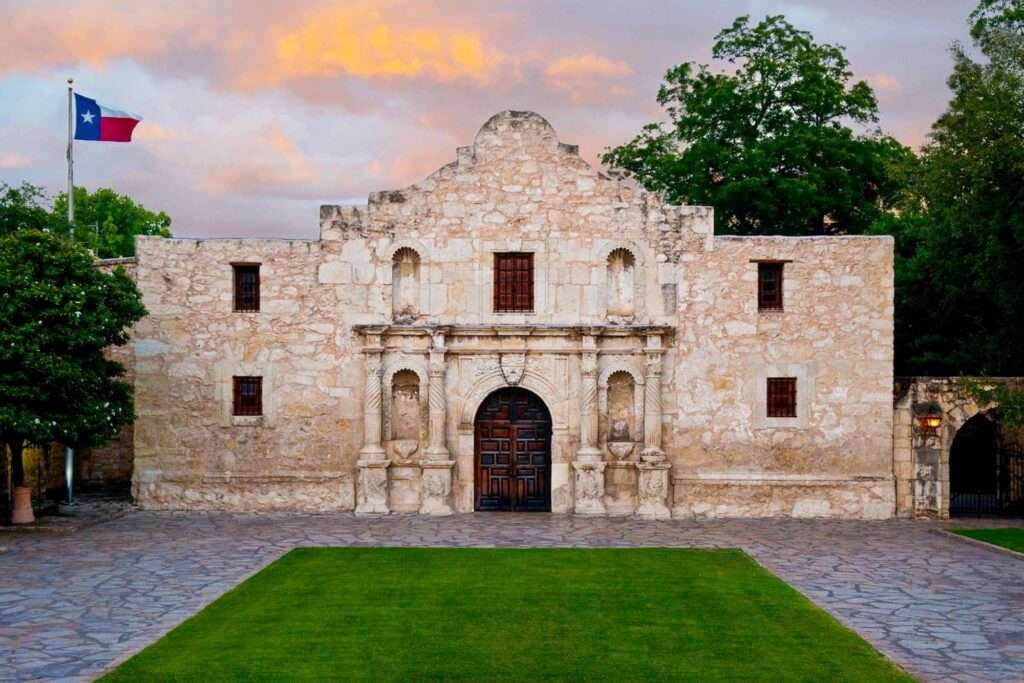
San Antonio — The Alamo and the Missions
Ninety minutes south. Start with expectations: the Alamo is smaller than every visitor expects — a church facade and gardens embedded in downtown, with most of its famous footprint under the surrounding streets. Treat it as thirty reverent minutes of story. The grounds are free, the recent museum expansion is good, and the history told there now includes more of it than it used to.
The better half of the day is the other four missions — Concepción, San José, San Juan, and Espada — strung south along the San Antonio River as a UNESCO World Heritage ensemble. San José, the “Queen of the Missions,” has the scale, the rose window, and a working parish the Alamo’s fame obscures. The Mission Reach bike path connects all of them along the restored river, and pedaling the missions is the best outing in the city.
For the rest: the downtown River Walk horseshoe is margarita theater — pleasant, touristed, best at night — while the museum and mission stretches are where the river actually breathes. The Pearl district is the eating answer, and Market Square covers the mariachi-and-mole hour. It’s a full day and an easy drive.
Read the full San Antonio day-trip page.
The Swimming Holes
The Hill Country’s spring-fed circuit runs on booking discipline, so here’s the current status by site.
Hamilton Pool (45 minutes west): the collapsed-grotto pool under its travertine dome is the region’s postcard, and it requires advance reservations — separate morning and afternoon slots that sell out weeks ahead in season. Swimming closes intermittently for bacteria levels and rockfall checks. The canyon walk is worth it even on no-swim days, but check status before promising kids anything.
Jacob’s Well (Wimberley, an hour southwest): the artesian spring from every diving video. Swimming access has been suspended in recent seasons as drought and aquifer depletion dropped the flow — verify current rules before you go. Pair Wimberley’s Blue Hole, its cypress-shaded and more reliably open neighbor (also on reservations), with the town square, and the day works regardless.
Krause Springs (Spicewood, 45 minutes): private, no reservations, 32 springs, a fern grotto, and a cash-friendly gate. This is the reliable fallback when the others are booked or closed.
Across all of them: summer weekends are the crunch, weekday mornings are the version the photographs were taken on, and Barton Springs (below) is the no-drive answer.
Waco — The Magnolia Question
Ninety minutes north, and the answer depends entirely on who’s asking. Waco’s tourism runs substantially on Magnolia — Chip and Joanna Gaines’ Silos complex — and for the show’s faithful, it delivers exactly what it promises: the market, the bakery queue, the manicured grounds. If that’s your pilgrimage, the drive justifies itself.
For everyone else, the Silos are ninety pleasant minutes of shopping, and the day needs the rest of Waco — which increasingly holds up. The Waco Mammoth National Monument is an in-situ dig of Columbian mammoths, ranger-toured and genuinely excellent. The Dr Pepper Museum occupies the old bottling works where the drink was invented, and the float at the soda fountain is the correct order. Add the suspension bridge and riverwalk where the Chisholm Trail crossed, and the Texas Ranger Hall of Fame if you want the mythology with footnotes.
If you’re not a Magnolia convert, stack the mammoths, the Dr Pepper, and lunch — and go on a weekday, when the Silos crowd thins and the town underneath shows.
Barton Springs, the Bats & Austin Itself
Some of the best days here don’t leave the city.
Barton Springs Pool — three acres of 68-to-70-degree aquifer water in Zilker Park, lifeguarded, cheap, open essentially year-round — is Austin’s true civic institution. The free Barking Springs spillway below the dam is the no-fee version, and the endangered salamanders living in the pool are why the rules read the way they do.
March through October, the Congress Avenue Bridge bat colony — over a million Mexican free-tailed bats, the largest urban colony in North America — emerges at dusk in long smoke-plume ribbons. Watch free from the bridge rail or the lawn east of it, or from a kayak below. August, when the pups fly, is peak spectacle. Emergence time varies nightly; arrive early and let the colony decide.
On eating: Franklin Barbecue’s four-hour line is real, and so is the payoff — there’s also a preorder workaround. First-timers get ninety percent of the transcendence at ten percent of the queue at la Barbecue, Micklethwait, or Terry Black’s. Breakfast tacos are the city’s actual daily religion; Veracruz’s migas taco is the standing order. For music, the Continental Club and the surviving dance halls — the Broken Spoke, still two-steppin’ — beat Sixth Street’s shot-bar gauntlet for anyone over 25, with Rainey Street splitting the difference. Add a paddleboard hour on Lady Bird Lake and the Capitol’s free tour (taller than the U.S. Capitol, as the guides will mention within ninety seconds).
Season math: spring and fall are the glory windows, summer is a 100-degree endurance event the springs exist to answer, and SXSW and ACL weeks reprice the entire city — attend deliberately or schedule around them.
Full day-trip pages: Hamilton Pool.
Frequently Asked Questions
Where is the best barbecue near Austin?
Lockhart, 35 minutes southeast — Kreuz, Black’s, and Smitty’s within blocks of each other, best done as a crawl with modest orders at each. Arrive by 11; the pits sell out. It beats the Franklin line for everyone but Franklin pilgrims.
Do you need reservations for Hamilton Pool?
Yes — timed slots sell out weeks ahead in season, and swimming closes intermittently for water quality. Check status before going. Krause Springs is the no-reservation fallback.
Is Jacob’s Well open for swimming?
Swimming has been suspended in recent seasons as the spring’s flow dropped — verify current status before you go. Wimberley’s Blue Hole (reservations required) and the town square make the day work regardless.
Is the Alamo worth visiting?
For thirty reverent minutes, yes — it’s smaller than expected. The better version of the day is the other four missions, UNESCO-listed and connected by the river bike path. San José is the showpiece.
When can you see the Congress Bridge bats?
March through October at dusk, peaking in August — over a million bats, watched free from the bridge or the lawn. Timing varies nightly; arrive early and let the colony decide.