Hamilton Pool from Austin: The Reservation Is the Ticket, the Morning Status Call, and Shoes That Mean It
An hour west, a collapsed grotto holds a jade pool under a fifty-foot waterfall — entered by timed reservation windows that vanish weeks out, with swimming that opens and closes on the morning’s water test.
The short version
- Hamilton Pool Preserve runs on timed reservation windows released by Travis County Parks — morning and afternoon slots, booked ahead per the alarm with summer weekends selling out weeks in advance — plus a per-vehicle fee at the gate; reservations and rules via parks.traviscountytx.gov.
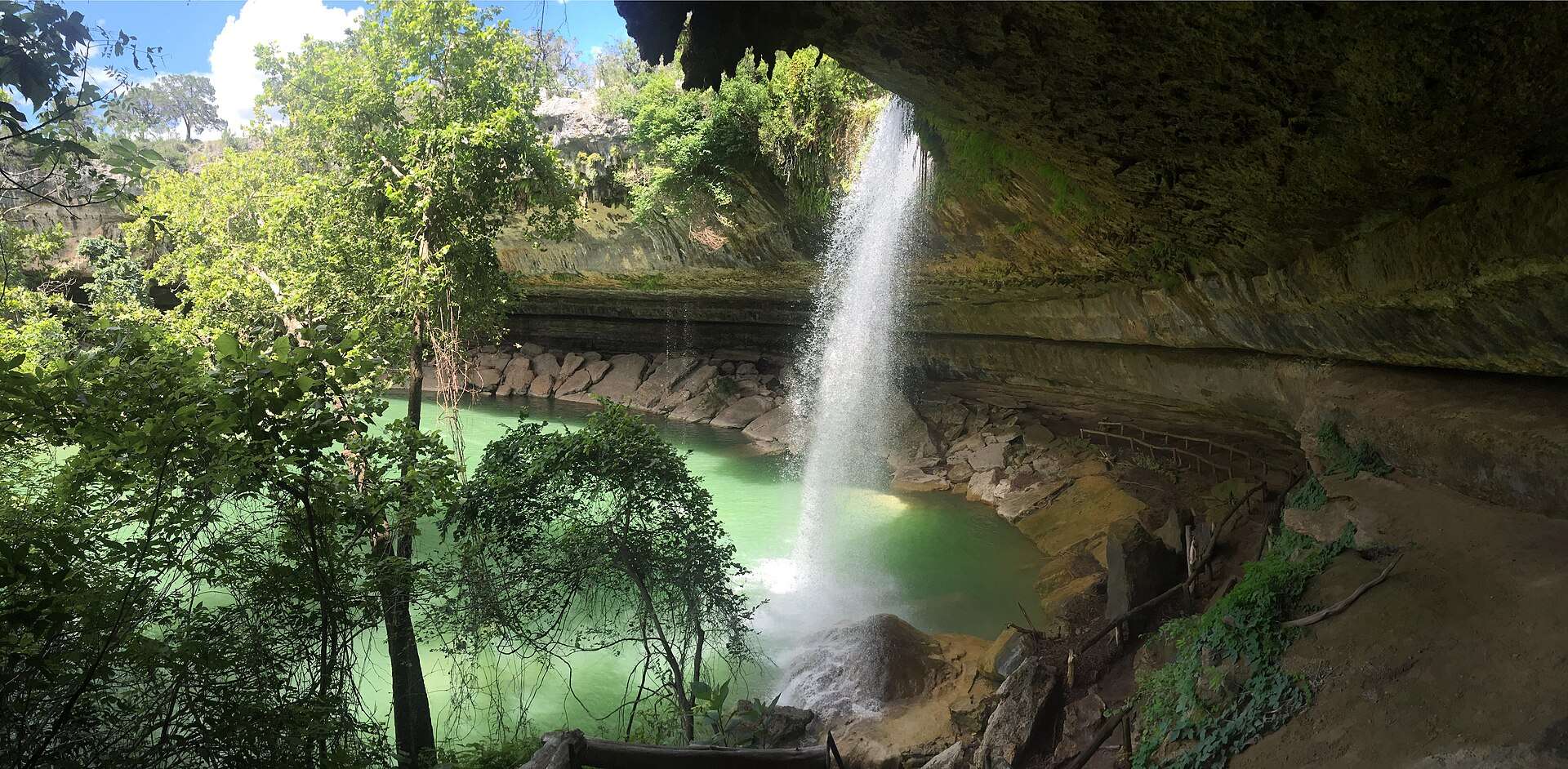
- The pool is a collapsed grotto: a limestone dome over Hamilton Creek fell in millennia ago, leaving a jade plunge pool half-roofed by the surviving overhang, with the creek’s fifty-foot waterfall pouring off the lip — steadily in wet seasons, as a veil in dry ones.
- The swim-status honesty per the alarm: swimming permission swings on bacteria testing after rains and on rockfall monitoring under the overhang — posted daily, changed without sentiment, and a closed-swim day still delivers the full geological spectacle from the shoreline.
- The trail runs a steep, rocky quarter mile from lot to pool — the alarm’s shoes-that-mean-it clause — with a connecting path along the creek to the Pedernales River for the extra half hour.
- The rules run absolute: no dogs, no glass, no lifeguards (swimming is at-your-own-risk when open), carry-in-carry-out, and the preserve’s protected status (golden-cheeked warbler habitat above the canyon) explains the capacity discipline.
- The neighboring valley extends the day: Westcave Preserve’s guided grotto tours across the river, Reimers Ranch’s climbing-and-biking acreage next door, and the Hill Country wineries-and-barbecue corridor home — with Pedernales Falls State Park as the standing alternative when Hamilton’s windows are gone.

Getting there
The alarm’s sequence is absolute: reservation first, everything else after — the windows are the only entry, walk-ups are turned away at the gate, and the release calendar favors planning weeks out for summer weekends. The morning-of status check (the county posts swim conditions) sets expectations before the drive. Arrive inside your window with water, real shoes, and whatever shade you carry; the lot-to-pool trail’s grade justifies its clause in both directions, the return climb especially in August.
The visit
Down the quarter mile at watch-your-footing pace, and the grotto opens: the jade pool under its stone ceiling, the waterfall’s fifty feet doing whatever the season’s rainfall allows — a thundering column after storms, a beaded curtain in drought, photogenic in every version. Swim days per the alarm run the full experience: the cool spring-fed water, the swim to the falls’ plunge line, the ledge shade under the overhang where the county’s rockfall monitoring draws its lines. No-swim days keep the shoreline loop, the cave-mouth acoustics, and the photographs that need no immersion. The creekside path to the Pedernales adds a flat half hour of cypress and river. Two to three hours covers the preserve properly; the window system means nobody overstays into anyone else’s slot. The Hill Country drive home routes past barbecue by design rather than accident.
When to go
Reservations run year-round with summer as the crush per the alarm — the swimming is best May through September and the booking difficulty scales to match. Spring runs the waterfall at its most reliable and the wildflower drive at its Texas best; autumn keeps swimmable water into October most years with the windows suddenly humane. Winter delivers the grotto as pure geology — cold, quiet, occasionally with ice fringe on the falls — at walk-up-adjacent availability. After any big rain, assume the swim status leans closed for testing per the alarm’s morning-call rule, and let the county’s post decide the day.
Frequently Asked Questions
How far ahead do I really need to book?
Summer weekends: weeks, at the release calendar’s opening. Summer weekdays: days. Shoulder seasons: often same-week. The county’s system shows live availability, which is the honest answer to any date. The alarm’s book-before-planning rule exists because the windows, not the weather, are the scarce resource.
What actually closes the swimming?
Two independent systems: bacteria counts after rainfall (the creek drains ranchland, and storms spike the tests) and rockfall risk under the overhang, monitored and occasionally roping off the ceiling’s shadow. Either can close swimming while the preserve stays open. The daily post per the alarm is the only source that matters.
Is it worth going on a no-swim day?
As a geological visit, genuinely — the collapsed dome, the waterfall, and the canyon photograph identically wet or dry, and the crowds thin when the swim flag drops. Travelers who came only to swim should check the post before driving; everyone else gets the grotto with elbow room.
How hard is the trail really?
A quarter mile of steep, rocky, uneven grade — ten to fifteen minutes down, a genuine huff back up in heat, with handrails at the worst pitches. Flip-flops fail here every single day, per the alarm’s shoes clause. Strollers stay in the car; carriers work.
Hamilton Pool or Pedernales Falls?
Hamilton for the grotto’s singular spectacle inside the reservation system; Pedernales Falls State Park for walk-up availability, bigger acreage, and river-scramble freedom. When Hamilton’s windows are gone, Pedernales is the standing answer — different products, same Hill Country, no wasted drive.